Taming Workspace Chaos Through Disciplined Directory Architecture
ProjectFolder Fieldguide is an educational website about organizing working materials so they make sense not only to their authors, but also to the colleagues who will inherit the project six months later.
It treats folders as part of how teamwork is organized. The core problem: a structure that is perfectly clear to one employee often becomes a mystery to the rest of the team. This is not a file management program — the site's foundation is schemas, naming rules, practical examples, reference materials, and self-fillable templates.
The Four Pillars of Clean Folder Engineering
Deterministic Hierarchy
Standardized root levels that never exceed three tiers of working depth before archive triggers, preventing nested disorientation.
ISO Naming Syntax
Enforcing ISO-8601 timestamps, lowercase kebab-case naming, and version suffixes that prevent collision across operating systems.
Contextual Indexing
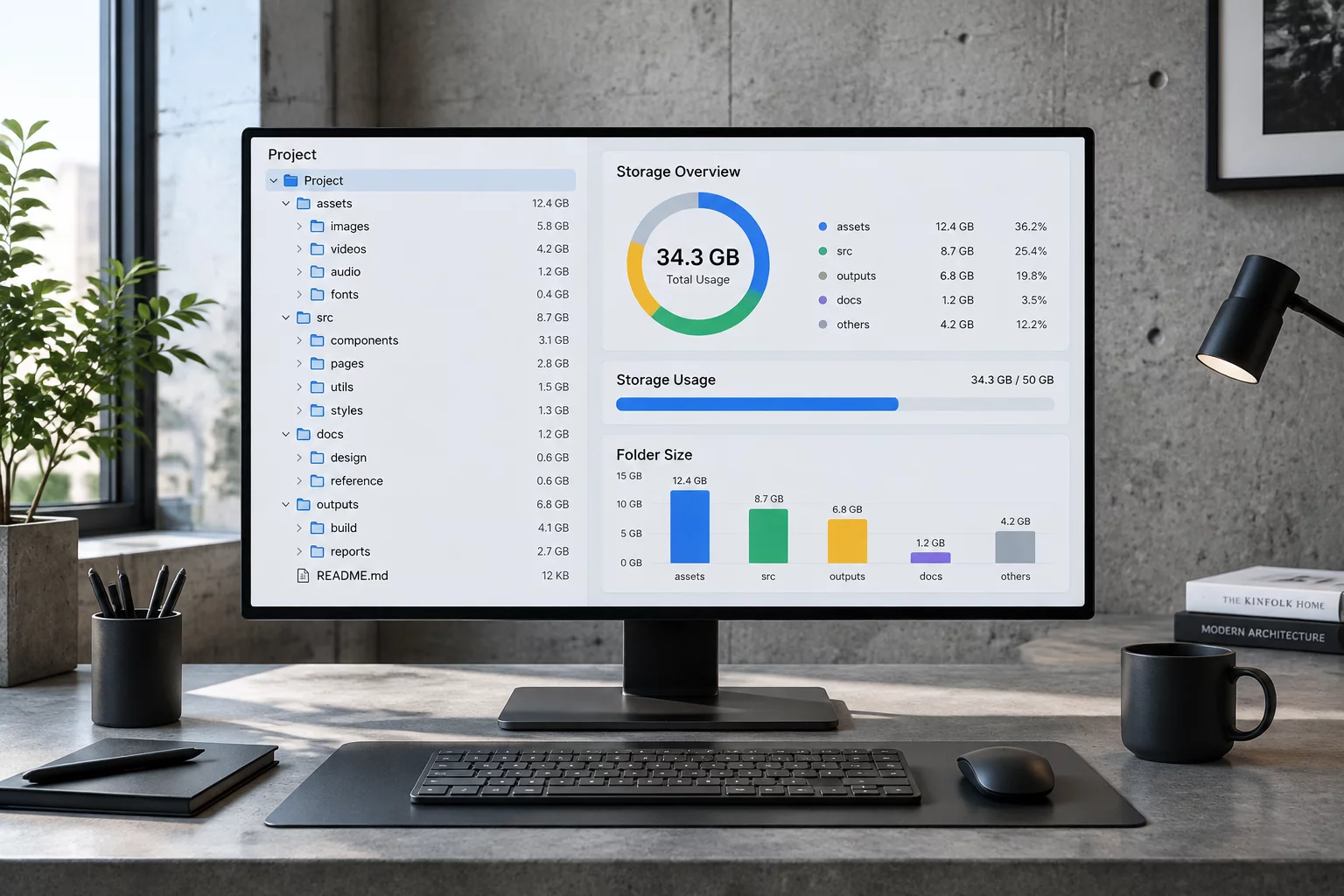
Integrating disk inspection routines like WizTree disk mapping to identify bloated caches, redundant logs, and orphan project dumps.
Immutable Archiving
Defined rules for read-only project freezing, manifest creation, and zero-loss cloud storage synchronization.
Built for Teams That Share Project Folders
Whether managing design collateral, video post-production pipelines, shared project drives, or administrative records, fragmented storage practices scale risk and latency.
- Small Companies & Design Bureaus: Predictable client folders and asset handoffs.
- Video Production & Project Teams: Clear separation of working materials and deliverables.
- Administrative Staff: Standardized naming and archive-ready documentation.
Open Standard & Continuous Evolution
Our fieldguides are developed through real-world testing across hybrid local-cloud infrastructure (NAS, S3, Google Drive, OneDrive, and local NVMe arrays).
We review tooling updates, filesystem quirks, and metadata management techniques to keep your digital workspaces reliable and clutter-free.
Learn how to perform deep disk space audits inside complex folder trees:
Read the Folder Context Guide