Version Control Without Software
A systematic methodology for tracking file revisions, maintaining chronological integrity, and preventing accidental overwrites using structured directories and strict naming taxonomy.
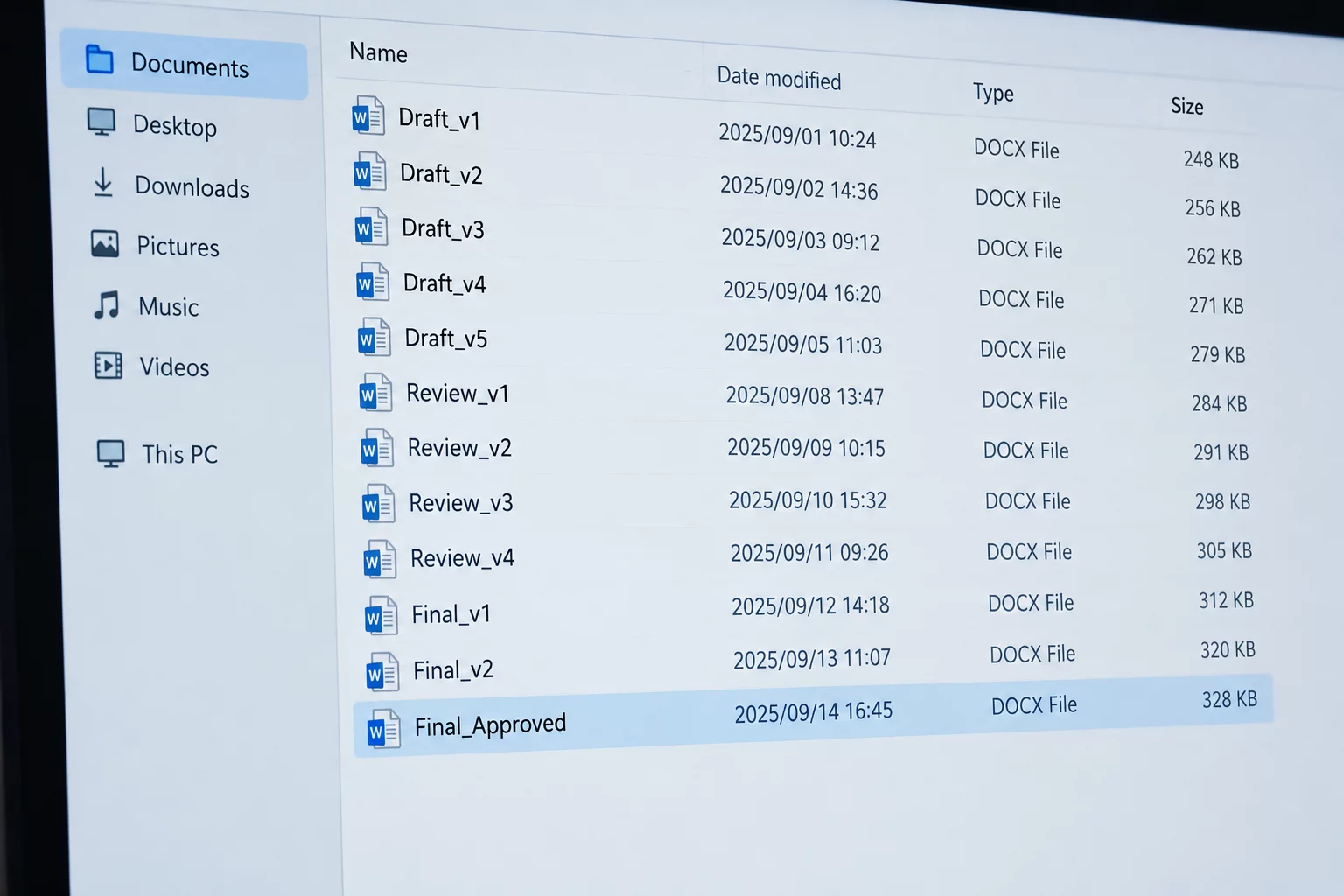
Systematic Revision Tracking in Standard File Systems
Managing project assets without dedicated version control software requires strict discipline and predictable folder structures. When teams collaborate on documents, spreadsheets, and creative presentations, uncoordinated edits frequently result in duplicate files, overwritten work, and lost revisions. Implementing a transparent project folder organization system ensures every team member immediately understands which file is active, who modified it last, and where previous iterations reside.
Clear team documentation and standardized version suffixes eliminate the guesswork surrounding file states. Rather than relying on confusing file suffixes like 'final_v2_edit_final', teams establish a singular source of truth supported by timestamped archive directories and consistent major-minor version tagging across all shared workspaces.
Core Rules for Manual Revision Management
- Use zero-padded major-minor revision numbers (e.g., _v01.0, _v01.1) appended directly before the file extension.
- Move superseded working iterations immediately into an explicit '_Archive' subfolder to prevent accidental editing.
- Append ISO-8601 date tags (YYYY-MM-DD) and editor initials whenever asynchronous peer reviews take place.
Reference Directory Hierarchy for Non-Software Versioning
The following tree structure demonstrates how to segregate active working drafts, milestones, immutable final deliverables, and superseded revisions within standard operating file systems.
📂 2026_ClientProject_Alpha/
├── 📄 00_RevisionLog.md                 [Change register & author log]
├── 📂 01_Working_Files/
│   ├── 📄 Alpha_Spec_v01.0_2026-07-02_AT.docx
│   ├── 📄 Alpha_Spec_v01.1_2026-07-05_JD.docx
│   └── 📂 _Archive_WIP/                 [Superseded drafts]
│       └── 📄 Alpha_Spec_v00.1_Draft.docx
├── 📂 02_Review_Milestones/
│   ├── 📄 Alpha_Spec_v01.0_M1-InternalReview.pdf
│   └── 📄 Alpha_Spec_v02.0_M2-StakeholderReview.pdf
├── 📂 03_Final_Deliverables/            [Read-only, client-approved files]
│   └── 📄 Alpha_Spec_Final_v02.0_Approved.pdf
└── 📂 04_Source_Assets/
    ├── 📂 Diagrams/
    └── 📂 Raw_Data/
Frequently Asked Questions
How do we decide when to increment a major versus a minor version number?
Increment minor versions (_v01.1 to _v01.2) for incremental edits, phrasing refinements, and peer review corrections. Increment major versions (_v01.0 to _v02.0) only when milestone structural changes occur or when a version is distributed externally to stakeholders.
How can multiple team members prevent conflicting edits without software locking?
Implement an active editor token in the file name or use a central 00_RevisionLog.md register where authors record check-out status, coupled with prompt moves to the _Archive folder upon completion.
Operational Discussion & Peer Reviews
VERIFIED LOGNo comments yet. Be the first to contribute workflow feedback.
Contribute Workflow Feedback